How to Start Sketching: Clearing Up Five Common Misconceptions for Beginners
In recent years, sketch travel has gradually become a favorite way to explore for many people. In Europe, you can often see travelers sitting on street corners, in parks, or outside cafés, recording the scenery in sketchbooks. Yet many people who want to try sketch travel have misconceptions about it. Let's clear them up one by one.
TRAVELSKETCH
Shiuan
10/29/2026
1. Is This Activity Only for People Who Are Good at Drawing?
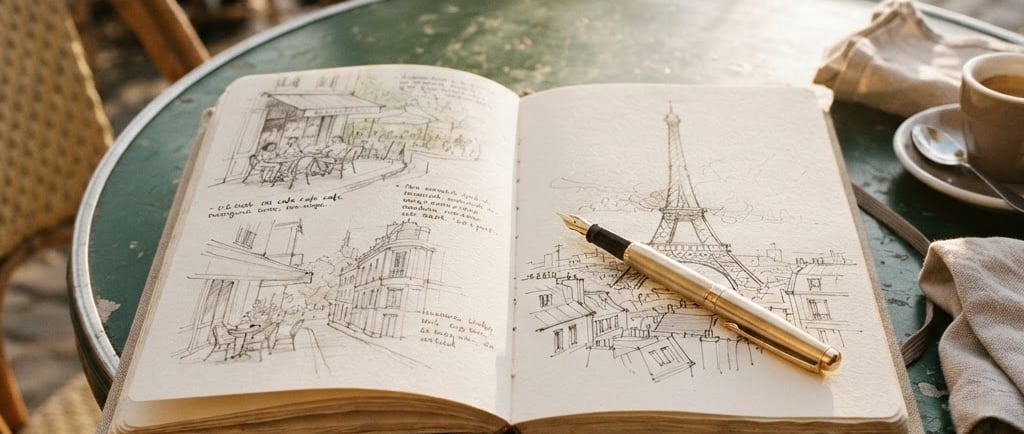
Not at all. Sketch travel is not a drawing exam, nor is its purpose to produce a finished artwork. It is a way to get to know a place by "observing, feeling, and drawing." Anyone can take part as long as they are willing to slow down and try putting pen to paper. Moreover, sketching values personal feelings and genuine expression. There is no single right or wrong way to do it, and sketches are not about ranking people by skill.
2. Do I Need a Complete Set of Drawing Equipment to Begin?
No. To start sketch traveling, all you need is a portable sketchbook and a fineliner or pencil that feels comfortable in your hand. If you want to add color, you can bring a small watercolor set or watercolor pencils. The simpler your materials, the easier it is to begin.
Tools are there to help you observe and record, not to determine the quality of your work. Instead of buying an expensive, comprehensive set of art supplies, the more important thing is to choose tools you will actually want to carry with you every day. As you keep experimenting, you will discover your own preferences and the tools that suit you best.。
3. Does Sketching Mean I Have to Start Drawing Immediately After Finding a Scene?
No. The first step in sketching is to stop and observe. When sketch traveling, there is no need to rush to pick up your pen. Sit in one spot for a few minutes and carefully study your surroundings. Look at the proportions of the buildings, the people on the street, the direction of the sunlight, and the way light and shadow shift as the wind moves through the treetops.
Next, feel. Notice the temperature, humidity, sounds, and light around you, and how they make you feel. Pay attention to your emotions in that place at that moment. Only then comes the drawing.
One of sketching's greatest qualities is that it encourages travelers to slow down, stay longer, truly notice a city's details, and connect with their surroundings instead of simply passing through.
4. Do I Have to Fill the Entire Page for My Sketch to Be Finished?
No. Even though the scene in front of you might be full of elements, complex buildings, and crowds of people, sketching invites you to ask yourself: What do I want to remember?
It could be:
A painting on the wall of a café
A single cup of coffee on a table crowded with food and objects
A balloon held by a little girl in the middle of a bustling crowd
You do not need to capture an entire city in a single sketch. A small corner or a single object can make a wonderful page in your travel journal. Leaving blank space in a drawing can be beautiful, too.
5. How Can I Practice Until One Day My Drawings Look Exactly Like Photographs?
If you want something that looks exactly like a photograph, you might as well take a photo! The point of sketching is not to reproduce the scenery in front of you, but to capture what you see and feel in the moment with limited time and a few lines. A building may be black, but if it gives you a happy, yellow feeling, you can draw it in yellow instead.
In sketching, you do not need to—and should not—fixate on every detail. What matters most is whether, each time you try drawing a scene, you notice more details of the city and discover feelings you had never been aware of before.
Sketching should be something to enjoy, not another source of pressure. Let go of perfectionism and dare to put pen to paper!
If all of this still feels too difficult, I offer Paris sketching walk can help you take the first step. The route is simple but full of stories, and the materials are provided, making it easy to get started !

